5 hr
Tijuca Rainforest Adventure: Waterfalls, Caves & Wildlife
- Entry ticket
- Mobile voucher
- Valid same day
- Free cancellation
Tijuca Forest Hike — Guided Trails, Waterfalls & Summit Routes
Mist lifts off the canopy, the city disappears below.
Compare fares, pick the fit — all bookings are mobile-voucher and eligible for free cancellation where shown.
5 hr
5 hr
6 hr
| Experience | Duration | Rating | Transfers | Pickup | Small group | Free cancel. | Price | |
|---|---|---|---|---|---|---|---|---|
|
Standard Entry
Most popular
Tijuca Rainforest Adventure: Waterfalls, Caves & Wildlife
|
5 hr | ★ 4.8 | ✓ | ✓ | ✓ | ✓ | €64 | Book → |
|
Standard Entry
Tijuca Forest Hiking Adventure: Peaks, Waterfalls & Caves
|
5 hr | ★ 4.8 | ✓ | ✓ | ✓ | ✓ | $76 | Book → |
|
Guided Experience
Tijuca Forest Hike: Waterfalls, Caves & Hidden Trails
|
6 hr | ★ 4.9 | — | ✓ | ✓ | ✓ | $62 | Book → |
Hand-picked experiences loved by thousands of travelers
9 hours
Free Cancellation
Trek 10.4km through Brazil's largest urban jungle to hidden peaks, waterfalls, and century-old ruins
5 to 5.5 hours
Free Cancellation
Explore the world's largest urban reforested jungle with a small group, hiking to waterfalls and caves
4.5 hours
Free Cancellation
Trek through the world's largest urban jungle, exploring cascading falls and ancient rock formations
5 hours
Free Cancellation
Scale Rio's tallest central peak through jungle trails, then cool off beneath cascading waterfalls
4 hours
Free Cancellation
Explore Rio's protected jungle on customizable trails, discovering waterfalls and wildlife with an expert guide
4 hours
Free Cancellation
Explore the world's largest urban forest by open-top jeep with hiking, waterfalls, and wildlife encounters
4 hours
Free Cancellation
Explore the world's largest urban rainforest by open jeep with waterfalls, wildlife, and panoramic views
7 hours
Free Cancellation
Journey through one of Earth's largest urban jungles with waterfalls, wildlife, and breathtaking vistas
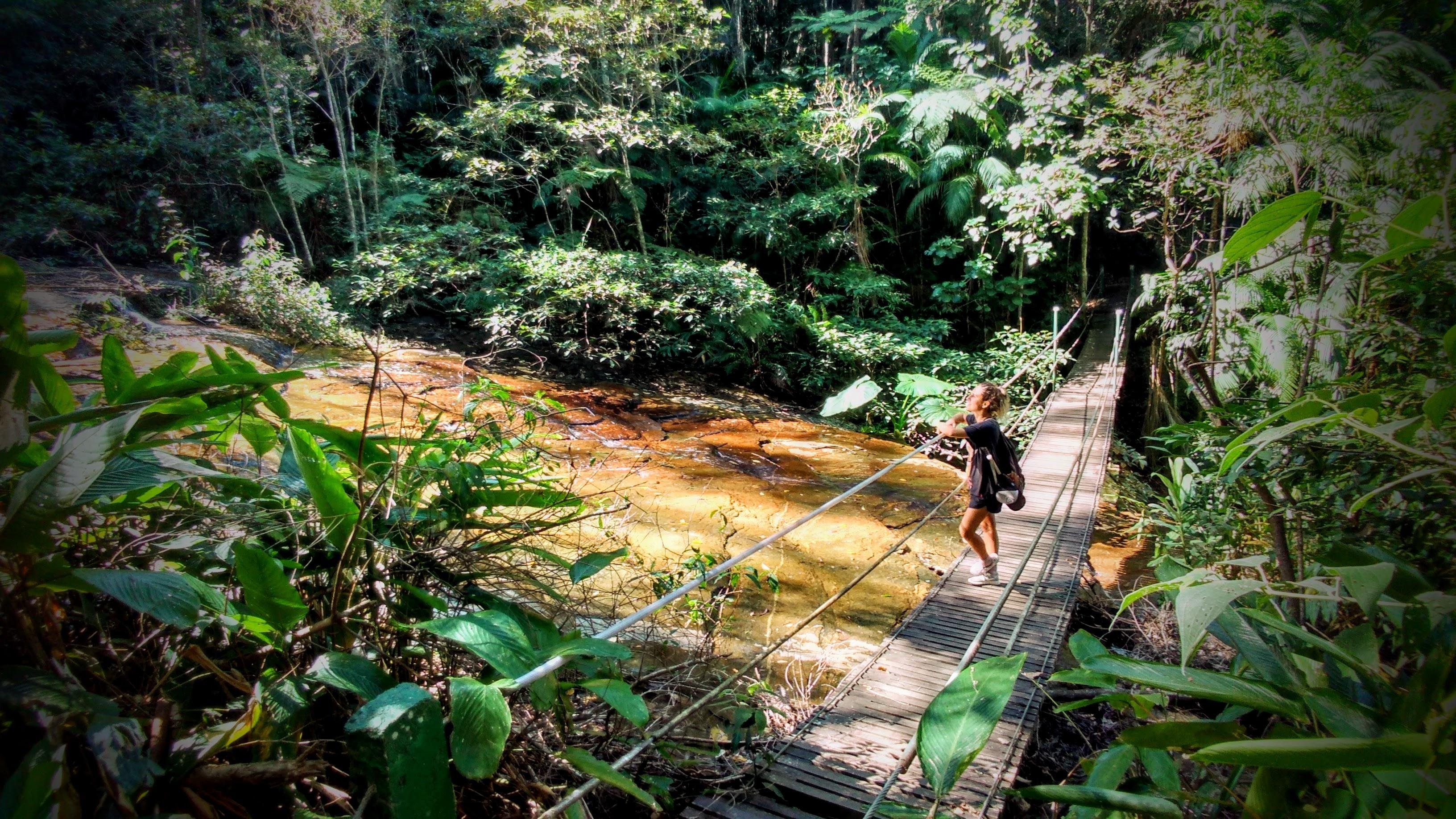
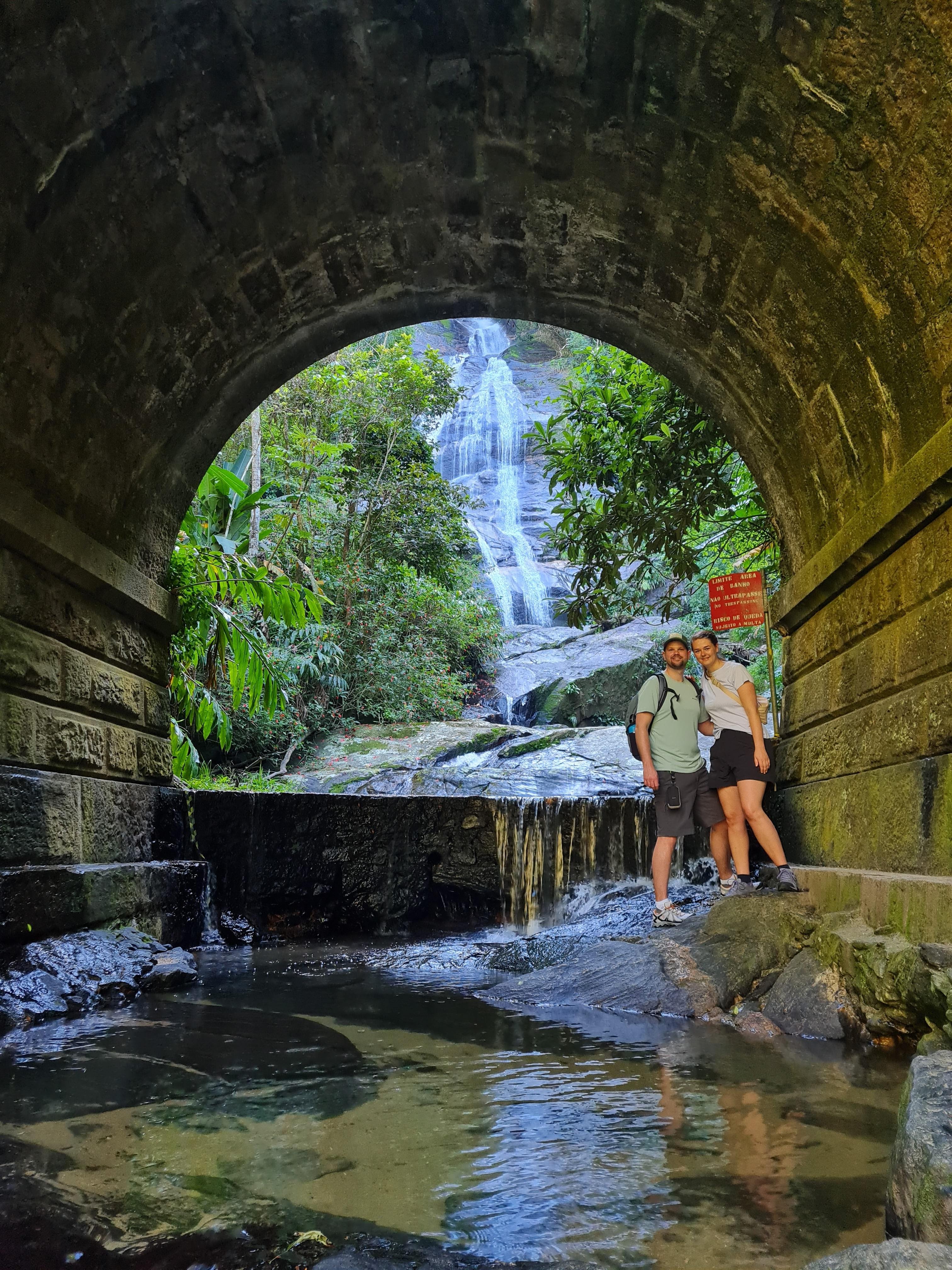
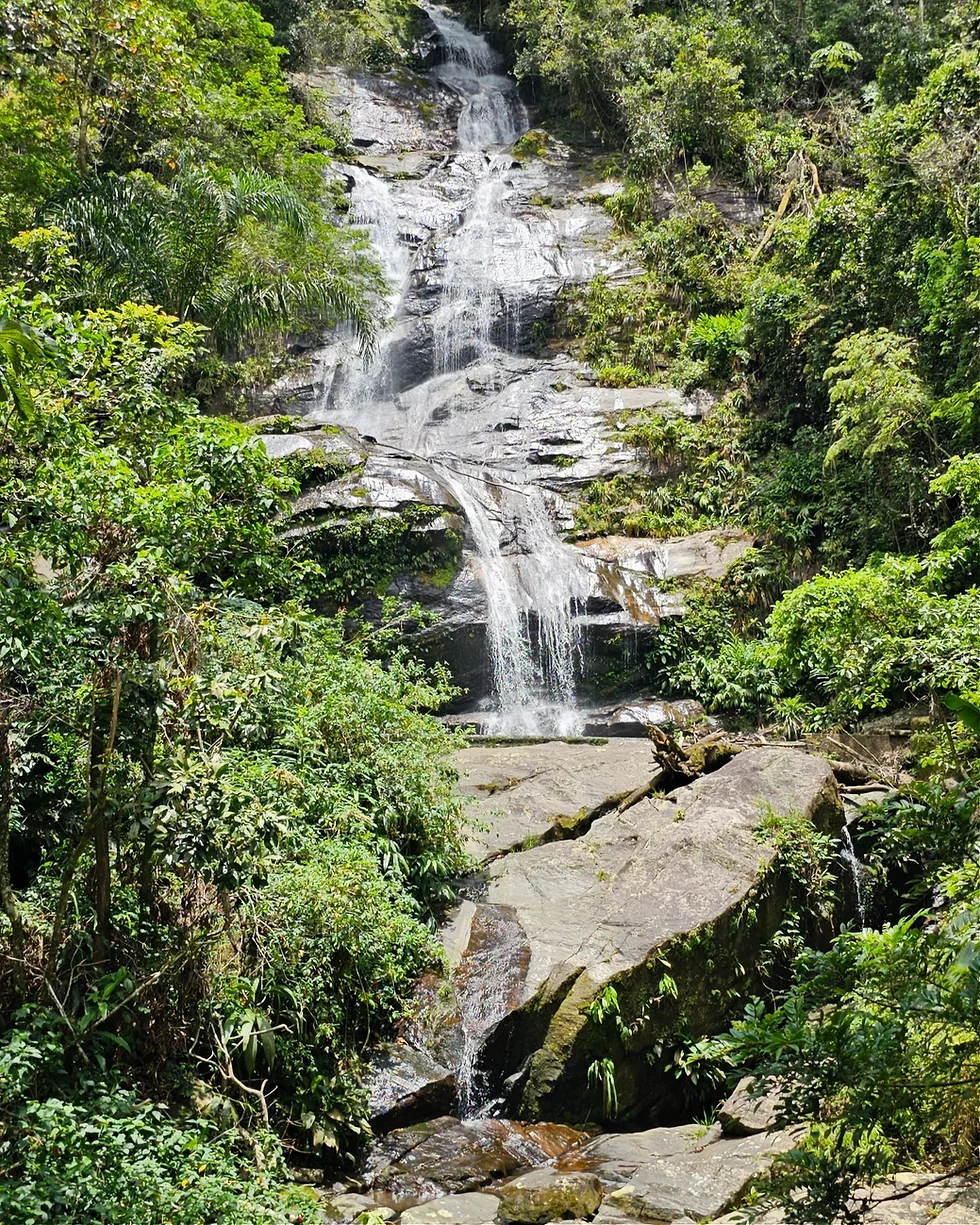
You arrive at Estrada da Cascatinha, 850 between 08:00 and 10:00, before the heat settles and the weekend queues build at the gate. Entry costs nothing. You walk ten minutes on packed earth to Cascatinha Taunay, where the water drops thirty metres into a shallow pool and the air temperature falls with it.
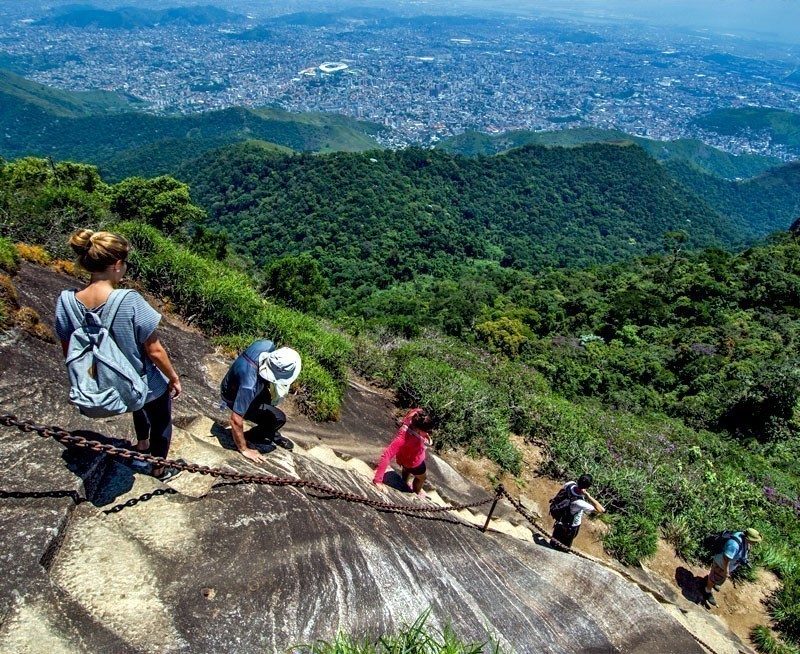
From there the track steepens. You pass the pink façade of the Mayrink Chapel, refill at the Bica da Rainha spring, and follow yellow trail markers through bamboo and jackfruit. Howler monkeys announce themselves long before you see them. Most tijuca forest hike routes to Pico da Tijuca take two to three hours of climbing; the last stretch is a 120-step staircase carved into the rock, with a chain handrail on the exposed side.
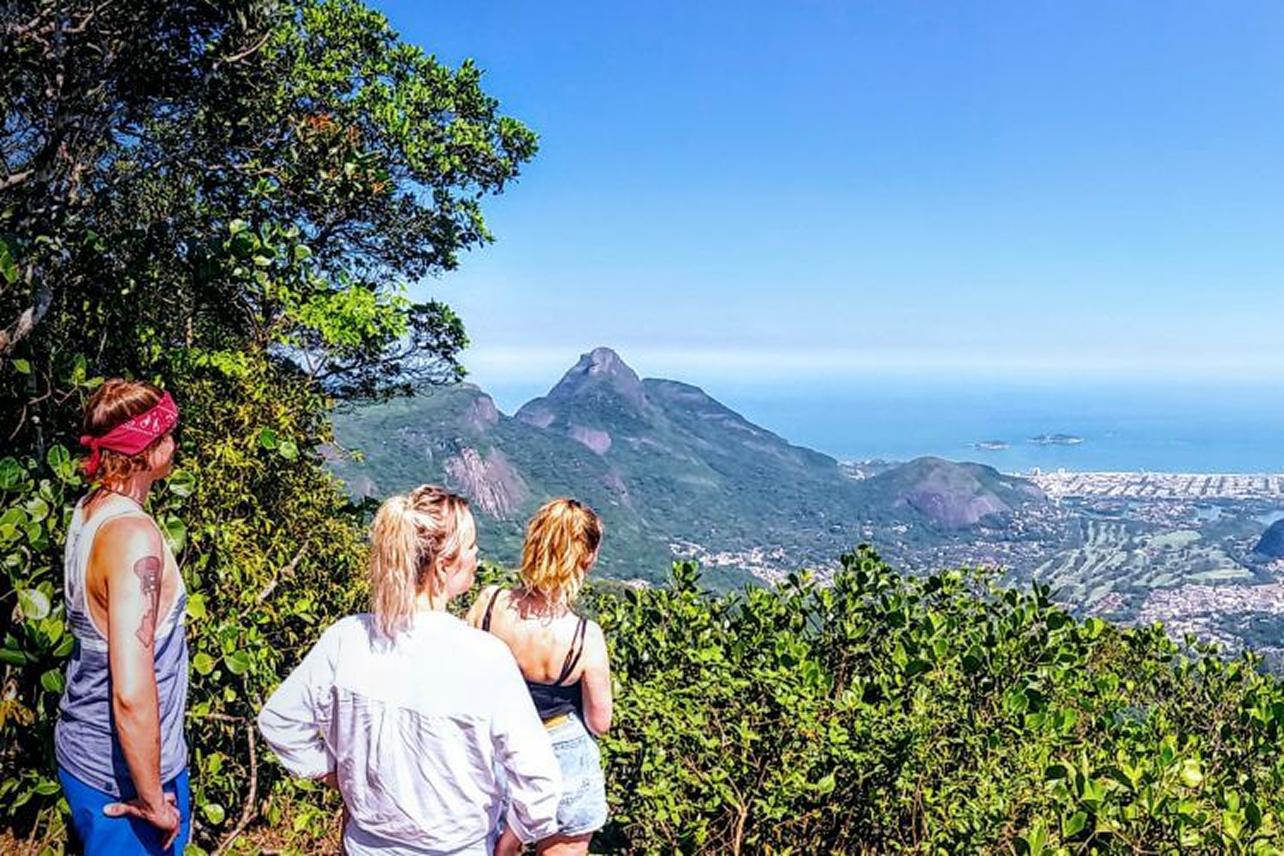
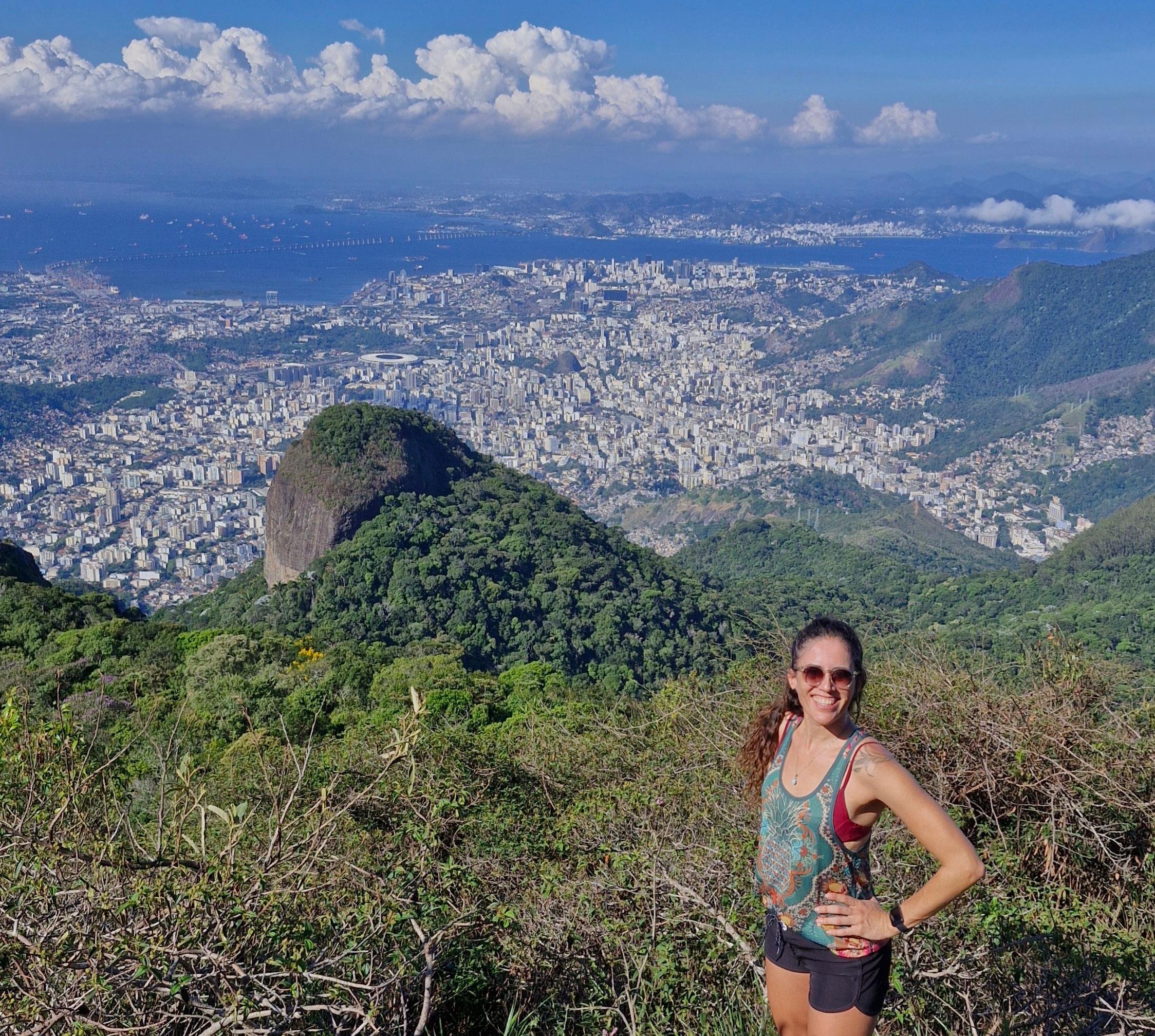
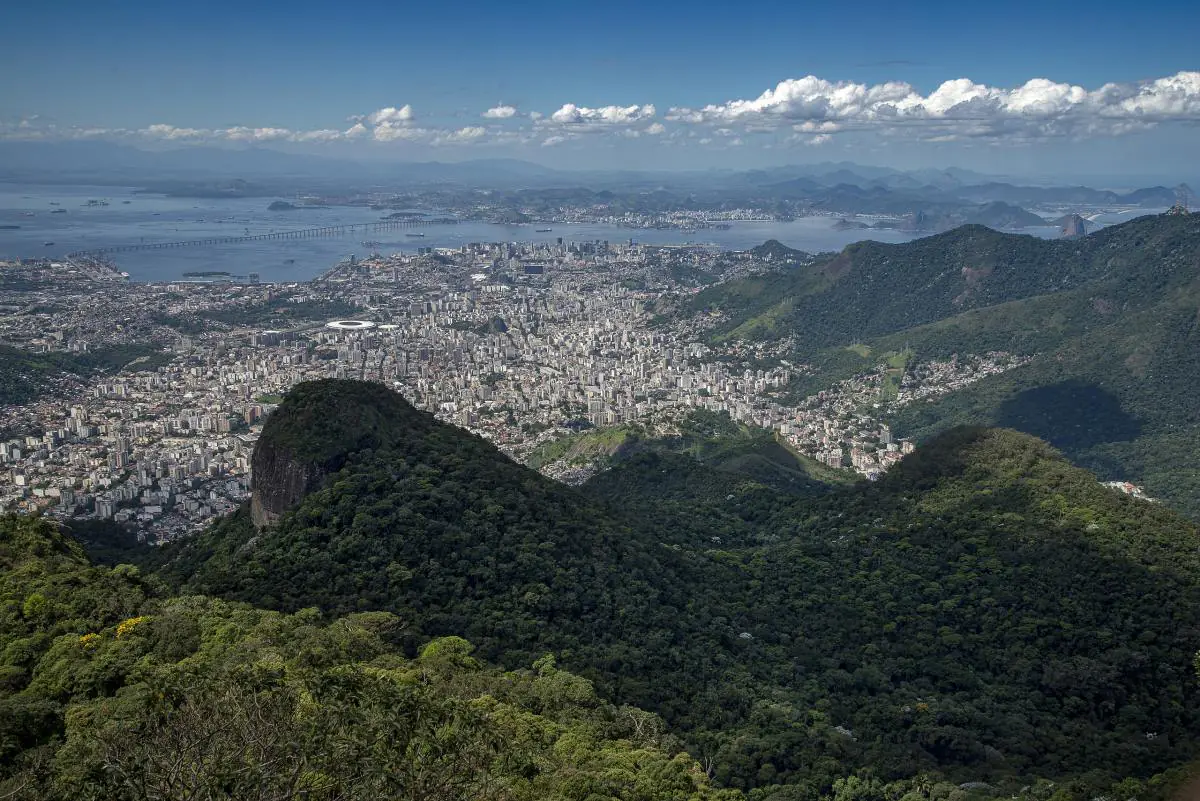
You stop at the summit at 1,021 metres. Guanabara Bay sits east, Pedra da Gávea south, the Serra dos Órgãos on the far horizon. Coming down, a guided tijuca forest hike tour usually detours through the Paulo e Virgínia grotto before the gates close at 17:00.
All the details about your upcoming adventure in one place
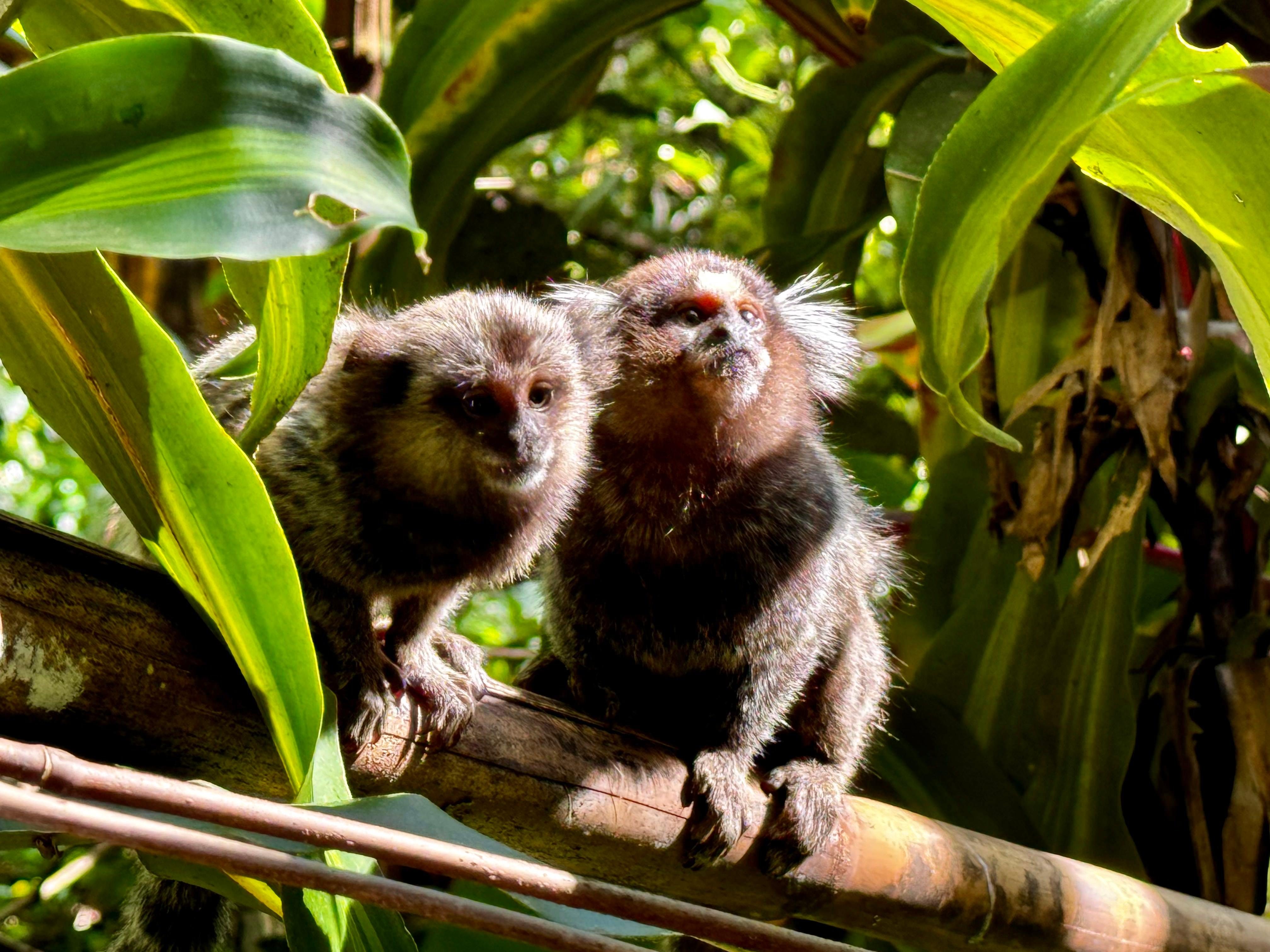
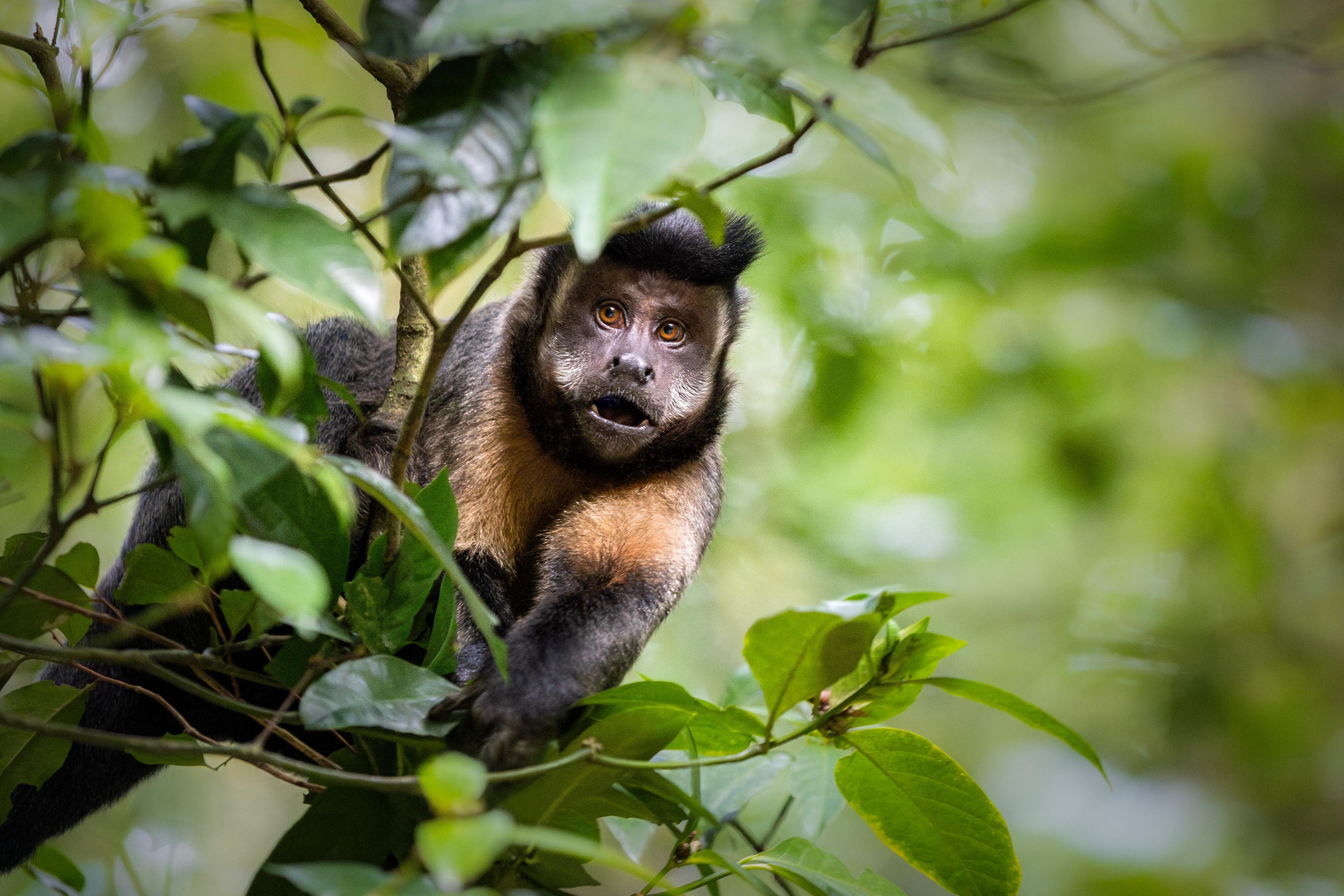
A guided tijuca forest hike leads you into the world's largest urban rainforest, a replanted Atlantic Forest of jackfruit groves, waterfalls, and granite peaks rising above Rio de Janeiro. Trails climb toward Pico da Tijuca and the Cascatinha Taunay, with guides pointing out capuchin monkeys, bromeliads, and toucans along the way. Most tijuca forest hike tickets include park entry, trekking poles, and a naturalist guide fluent in local flora.
The forest above Rio de Janeiro is not wild. It was planted. Between 1861 and 1888, under an imperial decree from Dom Pedro II, Major Manuel Gomes Archer and his successor Gastão d'Escragnolle oversaw the setting of roughly 100,000 seedlings across slopes stripped bare by coffee plantations.
What grew back is now considered one of the largest urban forests in the world, and the whole of it sits inside a single metropolis of six million people.
A tijuca forest hike therefore crosses a landscape of deliberate repair. The 3,953 hectares of Tijuca National Park hold Atlantic Forest species — jequitibá, cedar, palmito — alongside golden lion tamarins, capuchin monkeys, toucans and more than 300 recorded bird species. The park was federalised in 1961 and today forms part of the UNESCO-listed Rio de Janeiro: Carioca Landscapes between the Mountain and the Sea. Trails thread through all three sectors: Floresta, Serra da Carioca and Pedra Bonita–Pedra da Gávea.
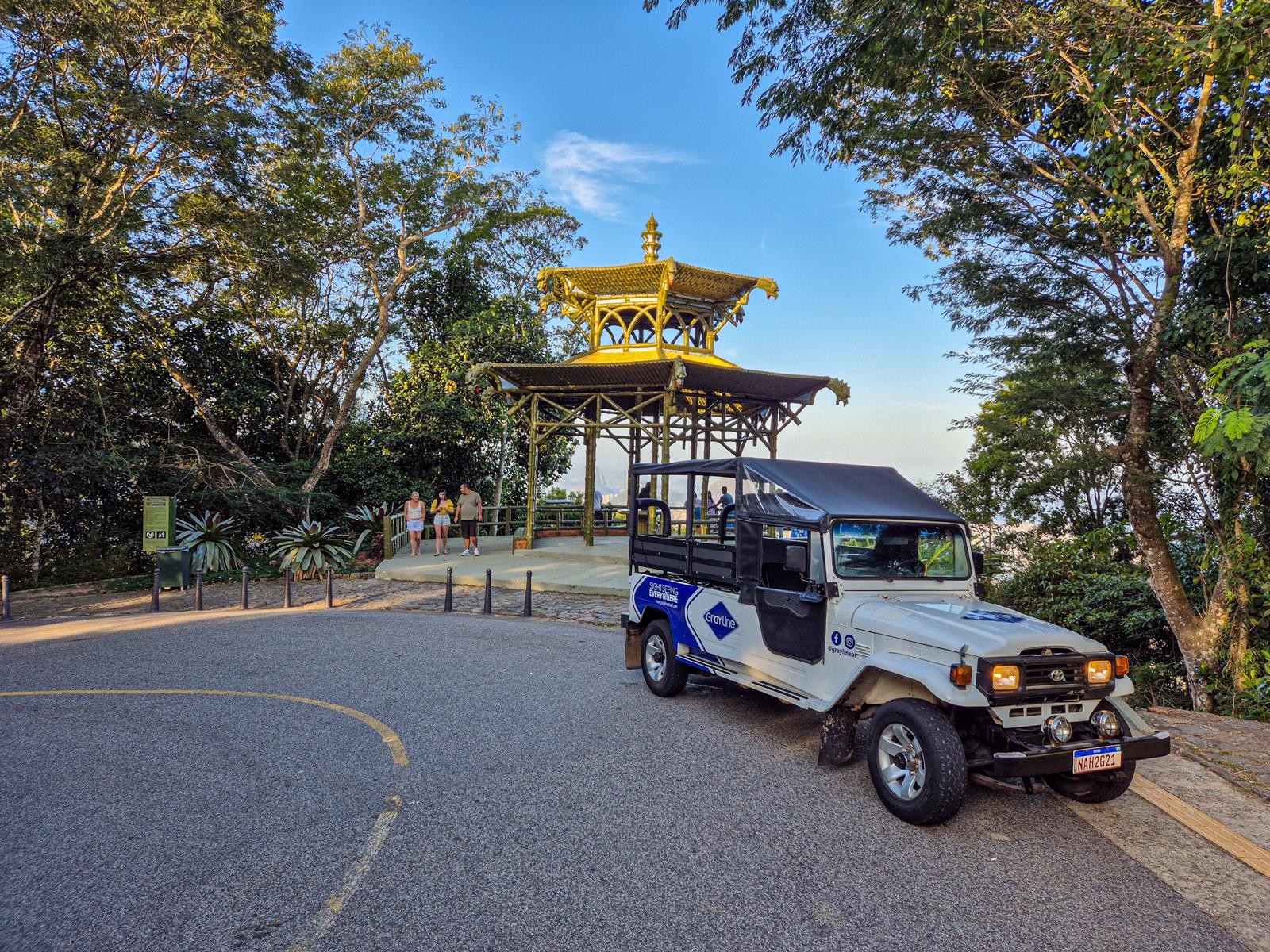
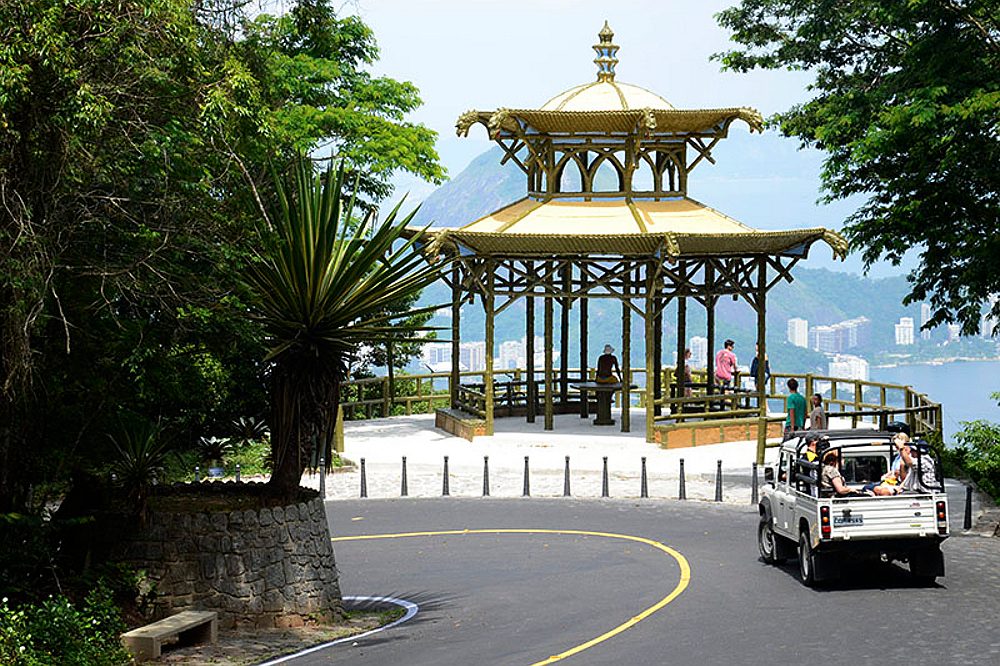
The architecture here is largely hydraulic and Romantic. Cascatinha Taunay, the 30-metre waterfall near the Estrada da Cascatinha entrance, was named for the painter Nicolau Taunay, whose studio once stood beside it. Further up, the Mayrink Chapel holds replica panels of Cândido Portinari's 1940s religious murals; the originals now hang in the national fine arts museum. Nineteenth-century viewpoints — Vista Chinesa's pagoda-style gazebo of 1903, the Mesa do Imperador — were built as carriage stops and still frame the Lagoa and the sea beyond.
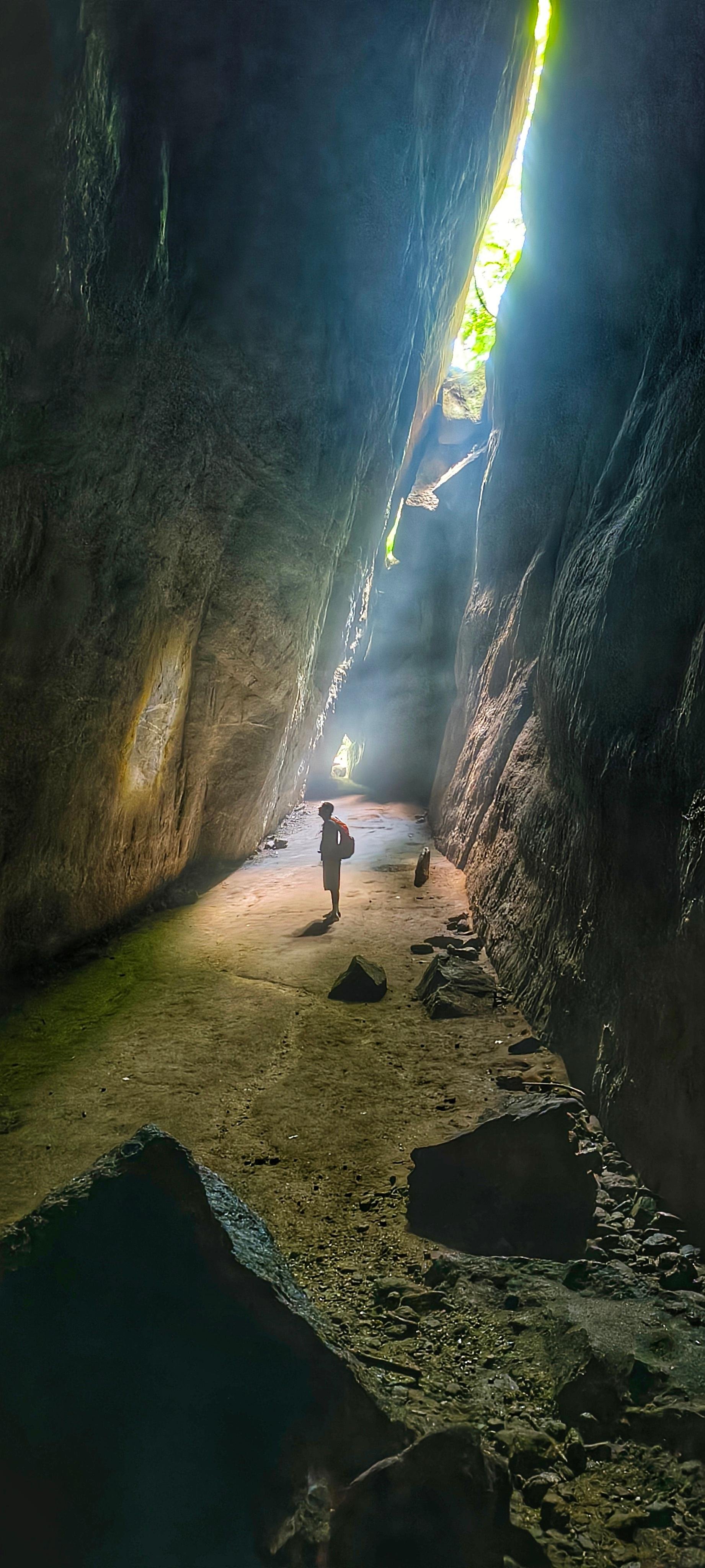
Most tijuca forest trails climb rather than wander. Pico da Tijuca, at 1,021 metres, is the highest point in the city and is reached by a stone staircase of 120 steps cut into the final rock face. Options range from a short tijuca rainforest hike to Cascatinha and the Bica da Rainha springs, to a full tijuca forest hike tour of the ridgeline. Operators running a tijuca rainforest hike explore waterfalls & caves circuit take in the Paulo e Virgínia grotto and Gruta Luís Fernandes. Entry to the park itself is free, and the gates open at 08:00 daily.

The forest above Rio is not wild — it was planted, seedling by seedling, to bring a ruined mountain back.
Wear sturdy, closed-toe hiking shoes as trails can be rugged and occasionally slippery. Light, breathable clothing is recommended for the humid Atlantic Forest climate.
Keep all personal belongings in a small, lightweight backpack. Security personnel patrol the main areas, but always keep your valuables within sight.
The park is a premier spot for nature photography. You may use standard cameras and tripods, but please avoid blocking trails or disturbing wildlife for your shots.
Families are welcome to enjoy the natural surroundings and picnic areas. Younger children should remain on marked paths at all times to ensure safety near waterfalls.
While the park contains rugged mountain terrain, specific areas like the visitor center and certain lower trails are accessible. Always check with local authorities for the status of accessible paths.
No commercial food services exist within the deep forest trails. Pack sufficient water (at least 1.5L) and light snacks like nuts or fruit; please carry out all trash.
Opening hours
08:00–17:00 daily
Address
Estrada da Cascatinha, 850 - Alto da Boa Vista, Rio de Janeiro - RJ, 20531-590, Brazil
Accessibility
Some sectors offer accessible trails for all levels
Best arrival window
08:00–10:00 — Avoid mid-day heat and weekend crowds for a better hiking experience.
Entry fee
0 BRL (Free entry; some specific attractions or sectors may have separate charges)
Official site
https://parquenacionaldatijuca.rio
Public transport · 30-60 min · Varies by route
Take local buses to Alto da Boa Vista, followed by a short walk to the park entrance.
Car · 30 min · Fuel costs
Accessible via Estrada da Cascatinha; parking is available near the visitor center.
Entry to the park is 0 BRL. For private tijuca forest hike tours, please check individual operator terms regarding deposits.
Recommended time
4-5 hours
A comprehensive tijuca forest hike generally requires a half-day commitment to explore the lush Atlantic Forest canopy and local biodiversity. If you opt for tijuca forest hike tours, plan for extra time to navigate the terrain safely and appreciate the ecosystem at a measured pace. For those securing tijuca forest hike tickets is not required, as entry is free, yet managing your itinerary helps avoid peak congestion on narrow trails.
Crowd levels through the day
Weather · crowds · average price — dots go green to amber to red as each metric rises.
Dry season offers mild temperatures and clearer views, ideal for a comfortable tijuca forest hike.
Summer brings lush vegetation but higher rainfall, increasing the risk of slippery trails.
Arrive between 08:00 and 10:00 to beat the heat and crowds during your tijuca forest hike.
Carry more water than you expect to drink, as the humidity increases exertion.
By the 1850s, coffee plantations had stripped the Tijuca massif, and the springs feeding Rio de Janeiro were failing. Charcoal burners finished what the terraces began. The Carioca River thinned. Wells ran dry. In 1861, Emperor Pedro II signed the decree that ordered the ruined estates expropriated and the slopes replanted, placing the city's water supply above private profit. The measure created, almost incidentally, the path network that a modern tijuca forest hike still follows. Restoration here began as hydraulic engineering, not recreation. Execution fell to Major Manuel Gomes Archer, appointed in 1862. He worked with six enslaved men and women — Constantino, Eleutério, Manuel, Mateus, Leopoldo and Maria — alongside a few hired labourers. Seedlings were carried uphill by hand. Between 1862 and 1874 they set roughly 100,000 of them into exhausted soil, drawing stock from surviving Atlantic Forest remnants nearby. Their names went uncredited for more than a century. An honest tijuca forest hike tour begins with them. Archer withdrew in 1874. Baron Gastão d'Escragnolle succeeded him and recast the plantation as designed landscape. With the French landscape architect Auguste Glaziou, he cut carriage roads, opened belvederes, and framed the Cascatinha Taunay with stone benches and fountains. Exotic species entered the Floresta da Tijuca beside natives, a choice ecologists still dispute. Most routes marketed as tijuca forest hike tours trace those 1870s alignments rather than any colonial track. Legal protection arrived late. Christ the Redeemer was inaugurated on Corcovado in 1931, drawing crowds into woodland that held no formal status. A federal decree established the national park in 1961; the present name followed in 1967. UNESCO listed the wider Atlantic Forest as a Biosphere Reserve in 1991, and in 2012 the Carioca Landscapes joined the World Heritage roll. Fauna returned by design as well: agoutis were reintroduced from 2010, howler monkeys from 2015. Pico da Tijuca, at 1,021 metres, now crowns Rio de Janeiro's green landmarks. Whoever holds tijuca forest hike tickets walks a wilderness that was manufactured by decree.
Coffee estates and charcoal cutting had stripped the Tijuca massif, drying the springs that supplied Rio de Janeiro.
Emperor Pedro II decreed the expropriation of exhausted farms and ordered the slopes systematically replanted.
Major Manuel Gomes Archer and six enslaved workers planted roughly 100,000 seedlings across the ruined massif.
Baron Gastão d'Escragnolle took charge and, with Auguste Glaziou, added carriage roads, belvederes and fountains around the Cascatinha Taunay.
Christ the Redeemer was inaugurated on Corcovado, above forest that still carried no legal protection.
A federal decree established the national park, which took the name Parque Nacional da Tijuca in 1967.
UNESCO designated the surrounding Atlantic Forest as a Biosphere Reserve.
The Carioca Landscapes, including the replanted massif, entered the UNESCO World Heritage list.
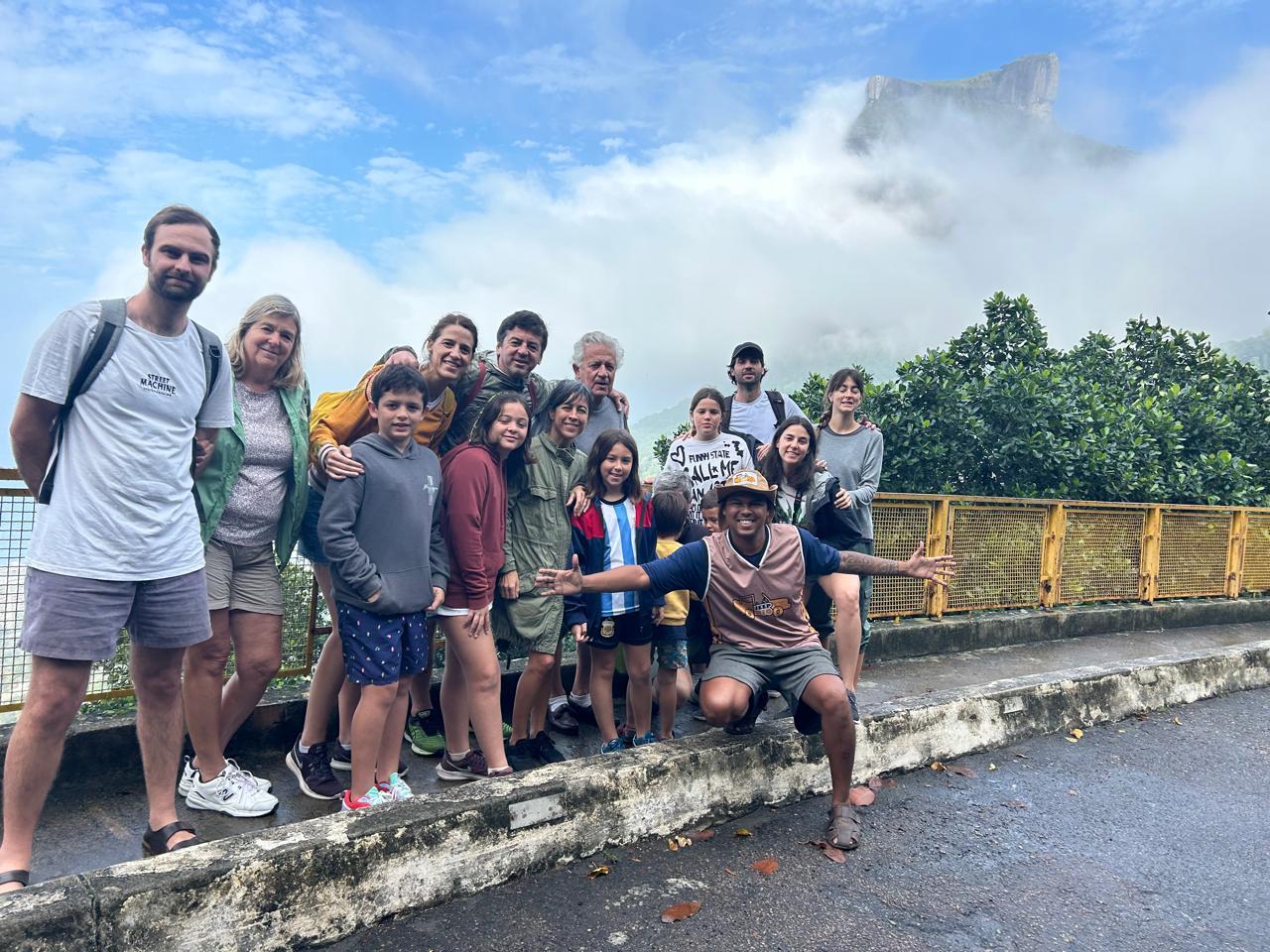
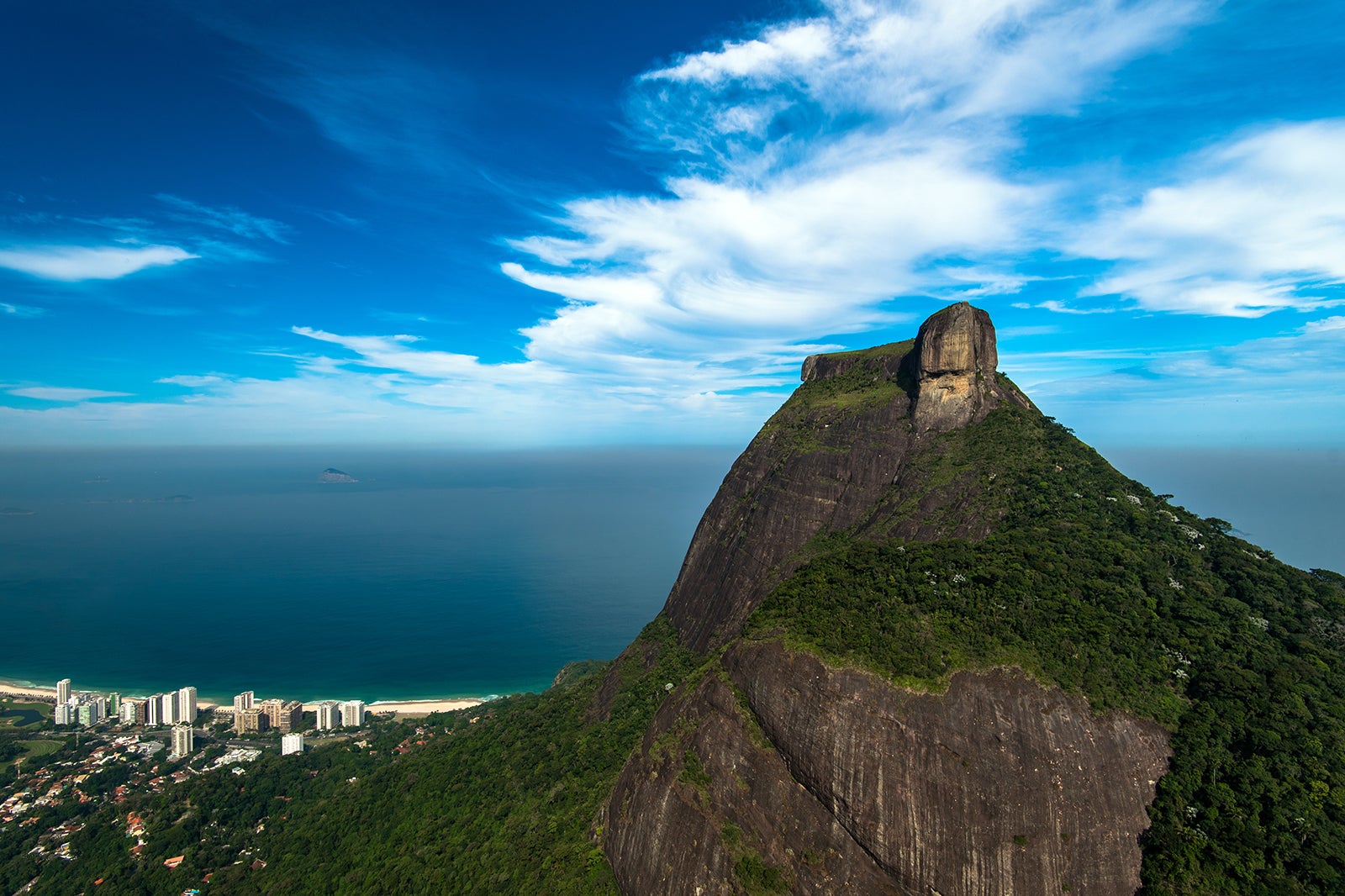
Position your camera at the rocky edge facing toward Pedra da Gávea to capture the dramatic granite monolith against the sky. This high-altitude vantage point requires careful footing and is the premier spot for a tijuca forest hike photo.
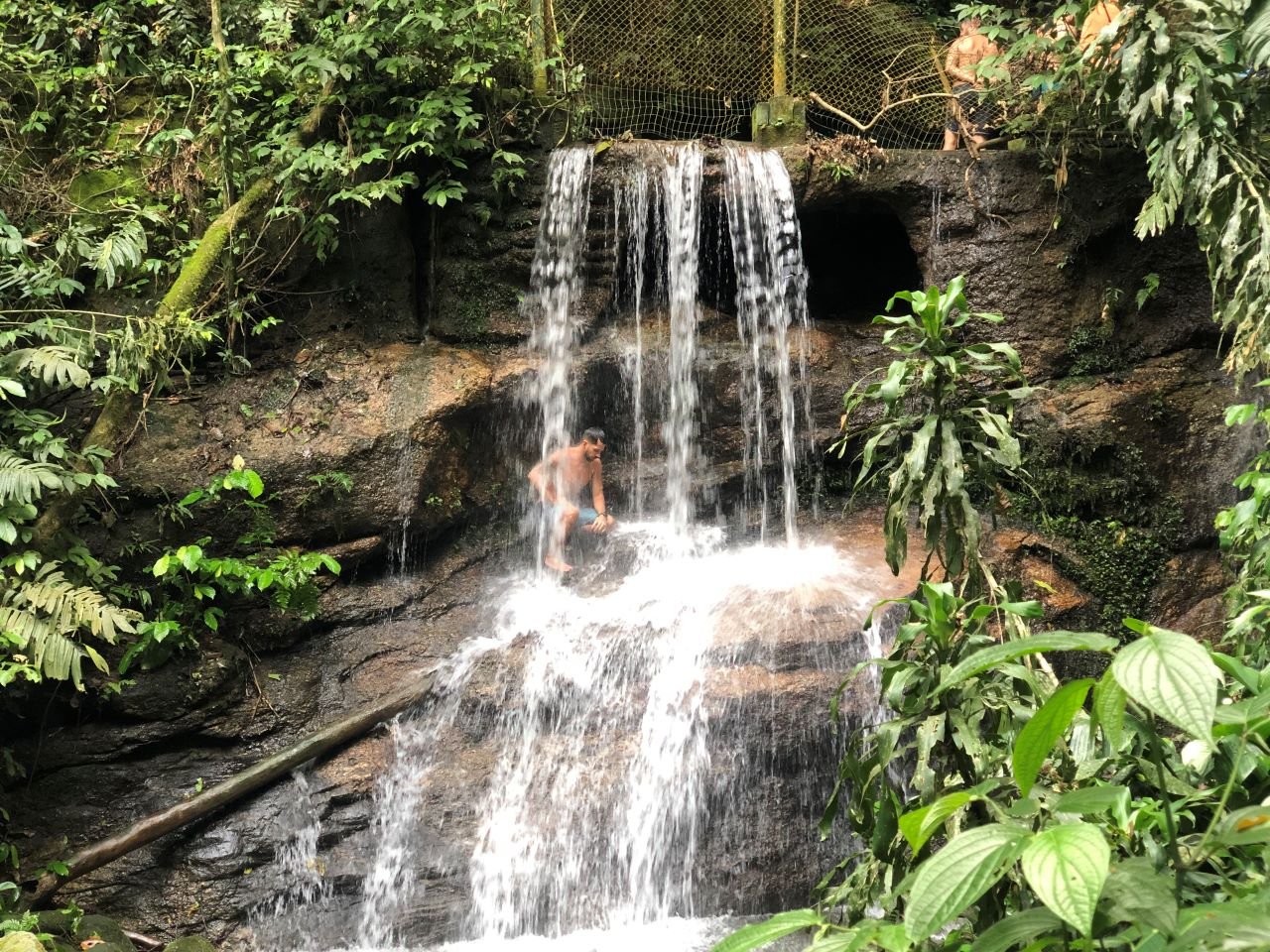
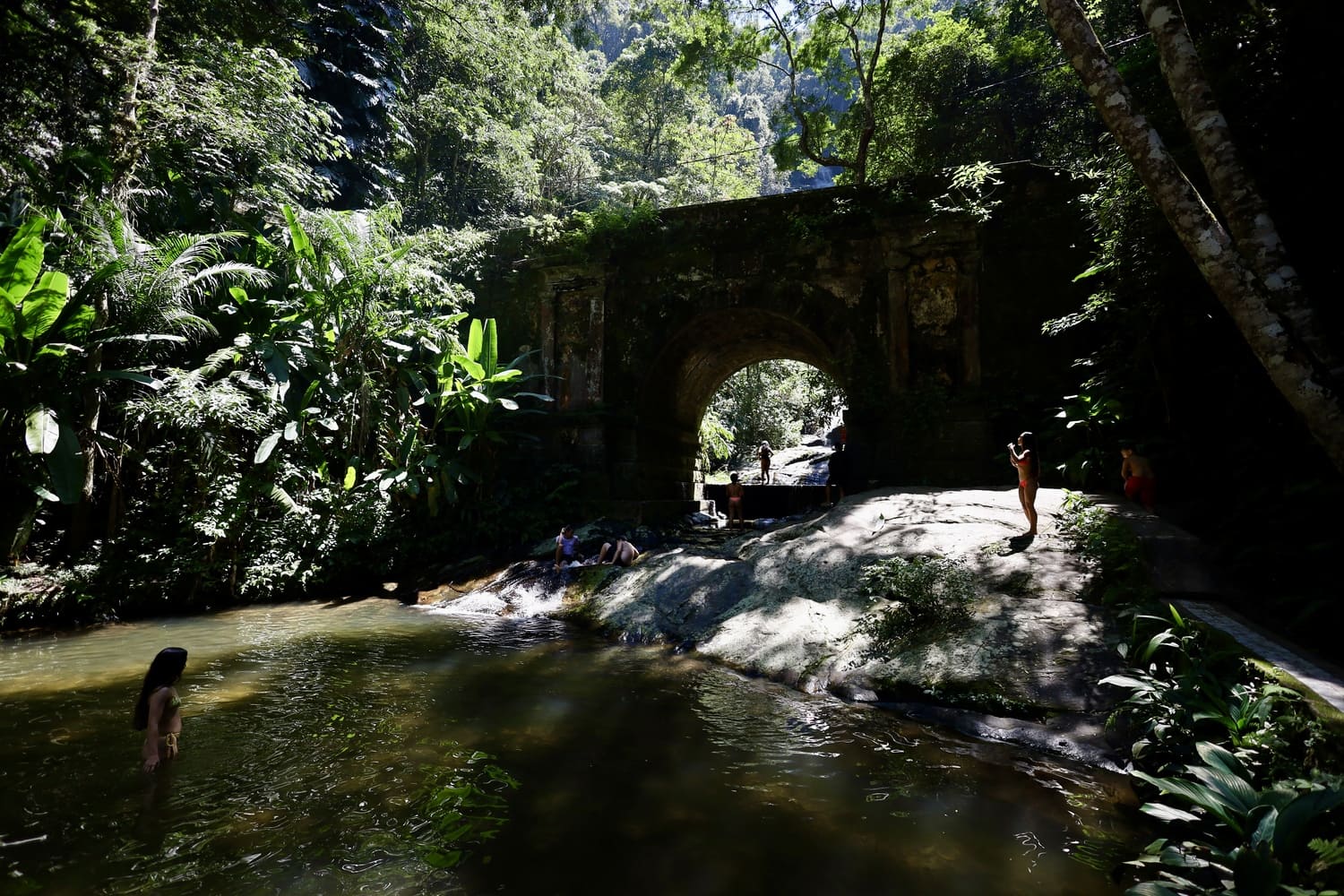
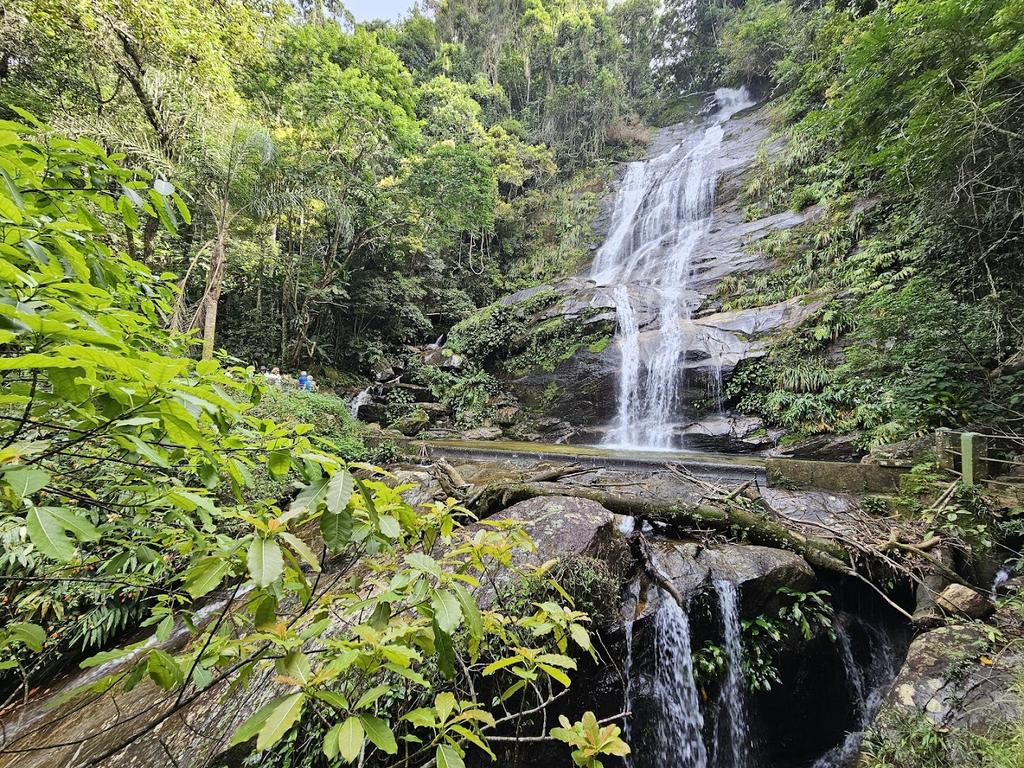
Frame the cascading water from the lower observation deck where the dense tropical foliage provides a natural border for your composition. This location offers a perspective on the park's lush biodiversity while you participate in tijuca forest hike tours.
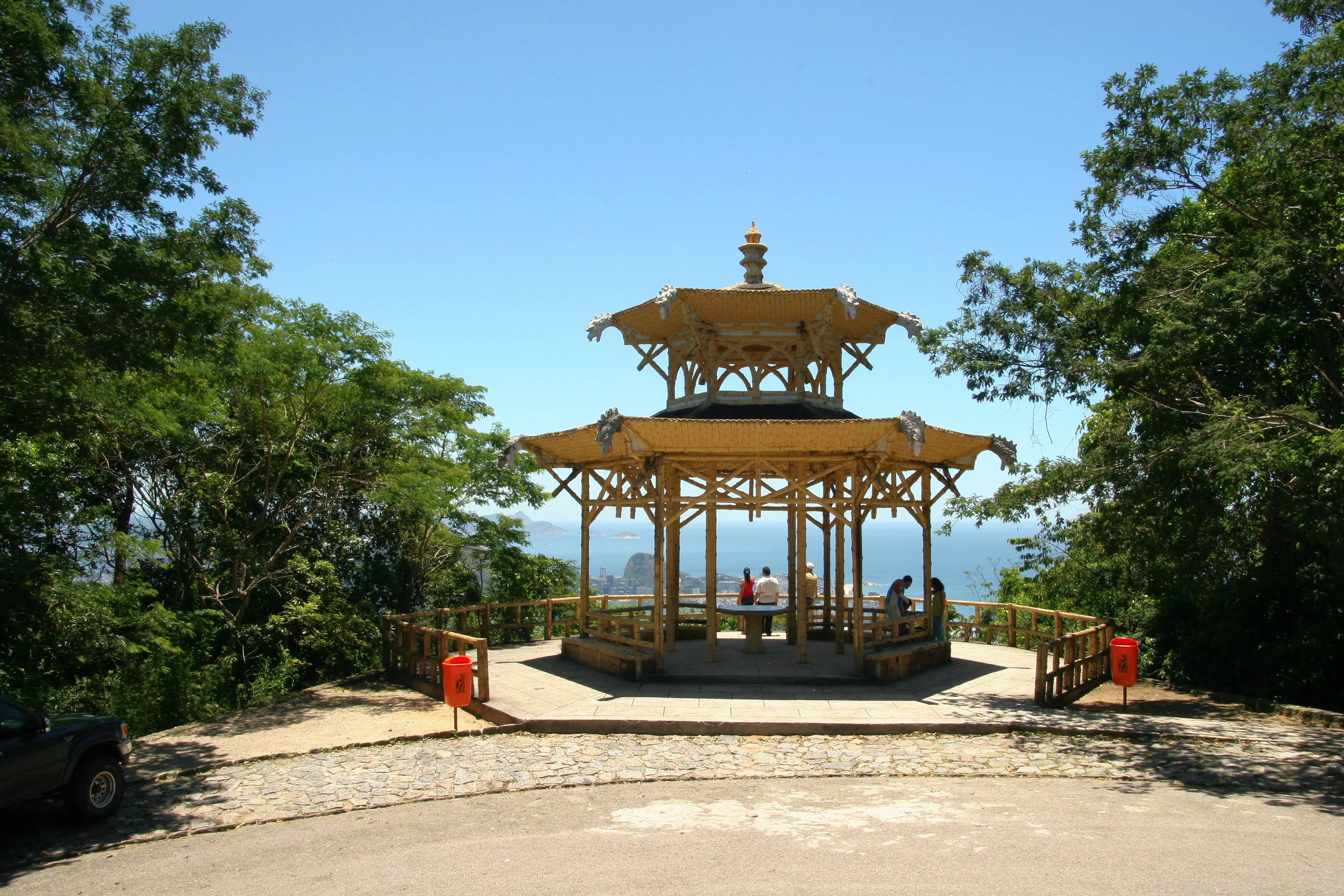
This pavilion offers a framed architectural view overlooking the vast green canopy with the city and coastline visible in the background. It serves as a popular endpoint for a guided tijuca forest hike tour where travelers often capture the contrast between urban development and nature.
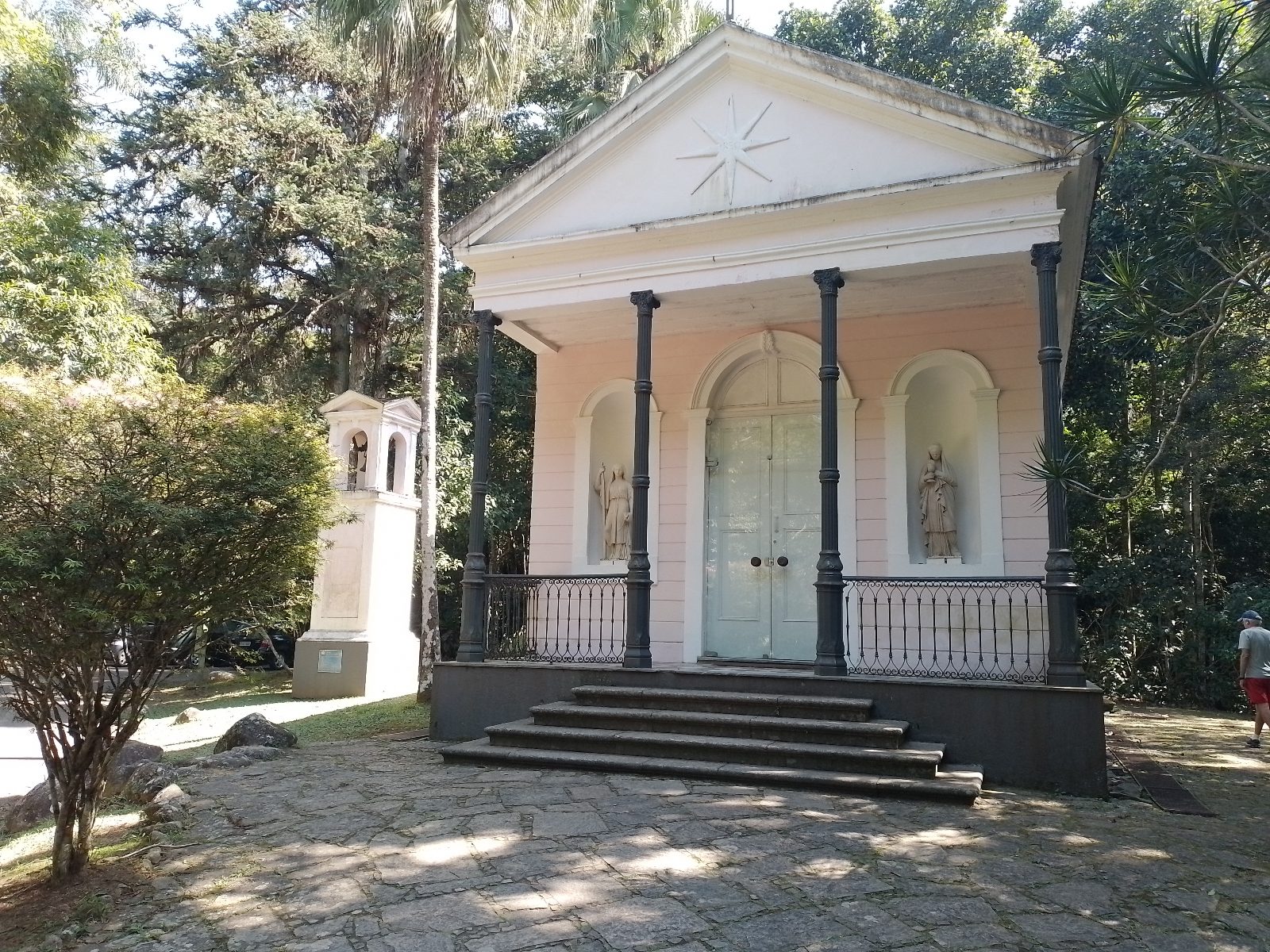
Focus on the small, pink-walled chapel set against a backdrop of deep green forest for a classic heritage shot. The clear light hitting the structure creates a clean aesthetic for those using tijuca forest hike tickets to explore the historic sector.
Dining options within the immediate vicinity of a tijuca forest hike are limited, so most visitors prefer grabbing a meal in the Alto da Boa Vista neighborhood before or after their trek. While some rely on nearby bistros, others opt to bring supplies, especially if planning a longer Parque Nacional da Tijuca excursion.
Located near the entrance, this venue offers traditional Brazilian dishes in a tranquil setting. It is a favored stop for those seeking a sit-down meal after finishing one of the tijuca forest hike tours.
Real experiences from real travelers
The tijuca forest hike starts under a canopy so dense that the city noise disappears within ten minutes of walking. Cicadas and howler monkeys filled every gap in the quiet, and the air stayed thick and warm even in full shade. Our guide pointed out capuchins crossing the branches above the stream near Cascatinha Taunay.
We joined a guided tijuca forest hike tour that climbed toward Bico do Papagaio, and the final stretch was all exposed roots and slick granite. Rio opened up below us in a haze of ocean and rooftops once we cleared the tree line. Wear shoes with real grip because the Atlantic Forest floor never fully dries out.
The trilha da Floresta da Tijuca is lovely walking until the ascent to Pico da Tijuca turns into a genuine climb with chain-assisted steps near the top. My legs were shaking at the summit and the wind up there dried a soaked shirt in minutes. From the rock you can trace Corcovado, Guanabara Bay and the ridges running west.
We sorted our tijuca forest hike tickets ahead of time and met the group down at the Alto da Boa Vista gate. Cascatinha Taunay was running loud after two days of rain, and the spray cooled everyone before the climbing started. Toucans called from somewhere above the palms for most of the way up.
Walking through this replanted Atlantic Forest feels like leaving Rio completely, even though Copacabana sits twenty minutes down the hill. Bromeliads clung to every trunk and the path stayed soft with wet leaf litter. A coati crossed in front of us near the Mayrink Chapel without paying us any attention.
Most tijuca forest hike tours stop at the lower viewpoints, but ours continued to the granite top where cloud kept sliding past below the rock. The stone was cold and surprisingly grippy under my palms, and the drop on the far side is very real. I have never seen a city of that size look so small.
A Rio de Janeiro rainforest tour sounded generic to me until we were standing under a troop of howler monkeys making a noise like distant thunder. The humidity was heavy enough that my camera lens fogged twice on the ascent. Vista Chinesa on the way back gave the clearest view of Ipanema and the lagoon.
Our tijuca forest hike finished at a stream crossing where the water ran clear over dark, rounded stones. Apart from two other groups we had the whole trail to ourselves, and the forest smelled of wet earth and cut vegetation. Hummingbirds worked the flowers along the edge of the track while we rested.
Sections of the path toward Pico da Tijuca turn into red mud that clings to boots and calves alike. The Rio de Janeiro landmarks visible from the summit made the effort worthwhile, with Sugarloaf poking out of the haze. Sturdy footwear matters far more than anything else in your pack.
We reached the summit inside a thick cloud and saw almost nothing of the bay below. The forest itself was still worth the walk, dripping wet and green with tree ferns taller than either of us. Weather is nobody's fault, though I would come back on a clearer day.
Everything you need to know for your journey
The park is open daily from 08:00–17:00. Plan your arrival between 08:00–10:00 for the best experience.
There is 0 BRL entrance fee to the park. Some private tours may have their own pricing.
No tickets are needed for general access, though some tours or specific nearby attractions may charge fees.
The dry season from May to September is ideal for a tijuca forest hike due to milder weather.
Yes, bring your own snacks and water as there are no food facilities inside. Carry out all trash.
Yes, many trails are family-friendly, but ensure children stay on marked paths during any tijuca forest hike.
Bring water, sunscreen, repellent, a hat, and sturdy hiking shoes for your tijuca forest hike.
Pets are not allowed in the forest to protect local wildlife.
You can reach the park via car, taxi, or public bus to Estrada da Cascatinha, 850.
Panoramic overlook offering sweeping views of Rio and the coastline.
Historic 19th-century chapel situated within the lush forest.
The tallest waterfall in the park, perfect for a short stop.
Quiet area nestled right at the forest's edge.
Popular tourist hubs like Copacabana or Ipanema.
Join thousands of happy travelers who have discovered this incredible experience
Book Your Experience Now